What's Really in Haines City's Water?
Is your house one of them?
Spots on your dishes. Scale on your faucets. That rotten-egg smell from the tap. Haines City has some of the hardest water in Florida here's why, and what you can do about it.
Why Haines City Water Is So Hard
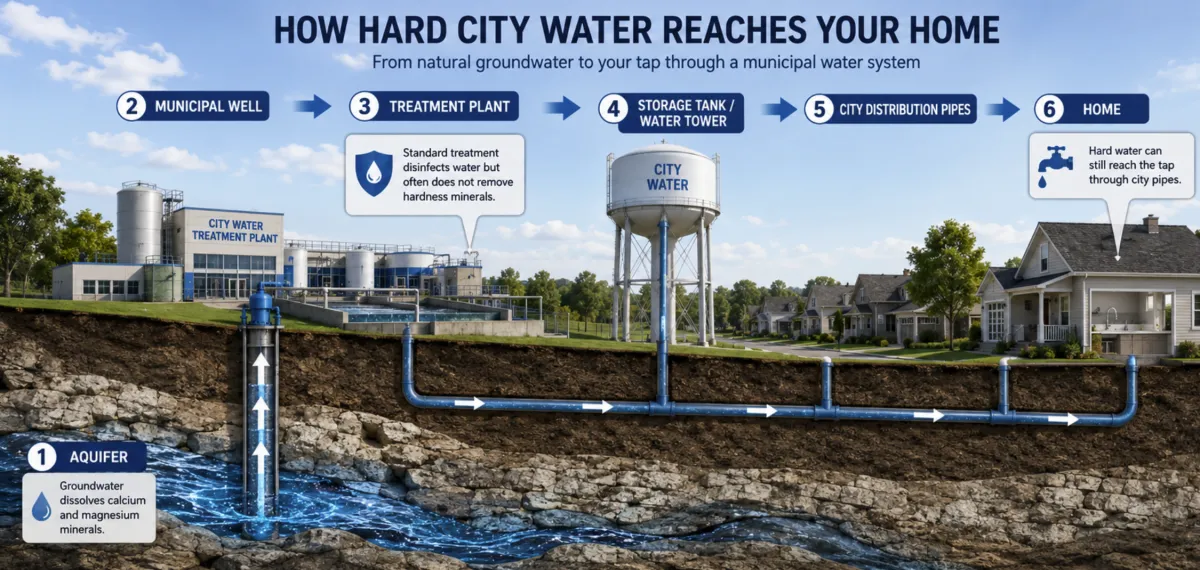
Haines City sits on top of the Floridan Aquifer, and all of our water, city or well, comes up through limestone. That limestone dissolves into the water, which is why hardness here typically measures 10 to 15+ grains per gallon. On the scale water professionals use, anything over 10 is "very hard."
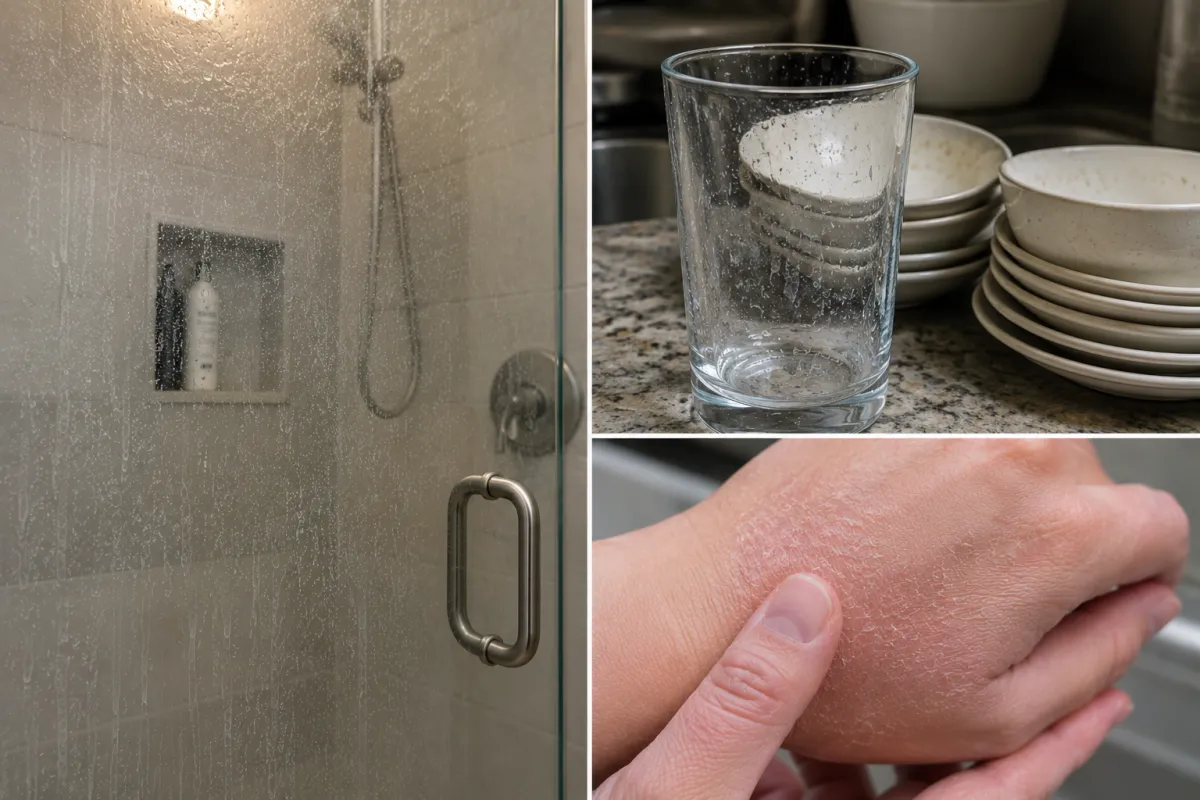
If you're in one of the newer communities along the US-27 corridor or around Southern Dunes, your municipal water is treated to be safe but it is not softened. The minerals that spot your glasses, dry out your skin, and shorten the life of your water heater come straight through. If you're on a private well east or south of town, you may also be dealing with sulfur odor, iron staining, or sediment on top of the hardness.
Which Water Do You Have?
Polk County homes get water two ways either from a city utility or a private well and each comes with its own problems.
Find yours below.
Polk County homes get water two ways either from a city utility or a private well and each comes with its own problems.
Find yours below.
On City Water?
Your water is disinfected, but hard minerals and chlorine taste pass right through. The usual fixes: a water softener for the hardness, and carbon filtration for taste and odor. New construction homes are plumbed with a softener loop in the garage, most builders leave it empty.
On a Well?
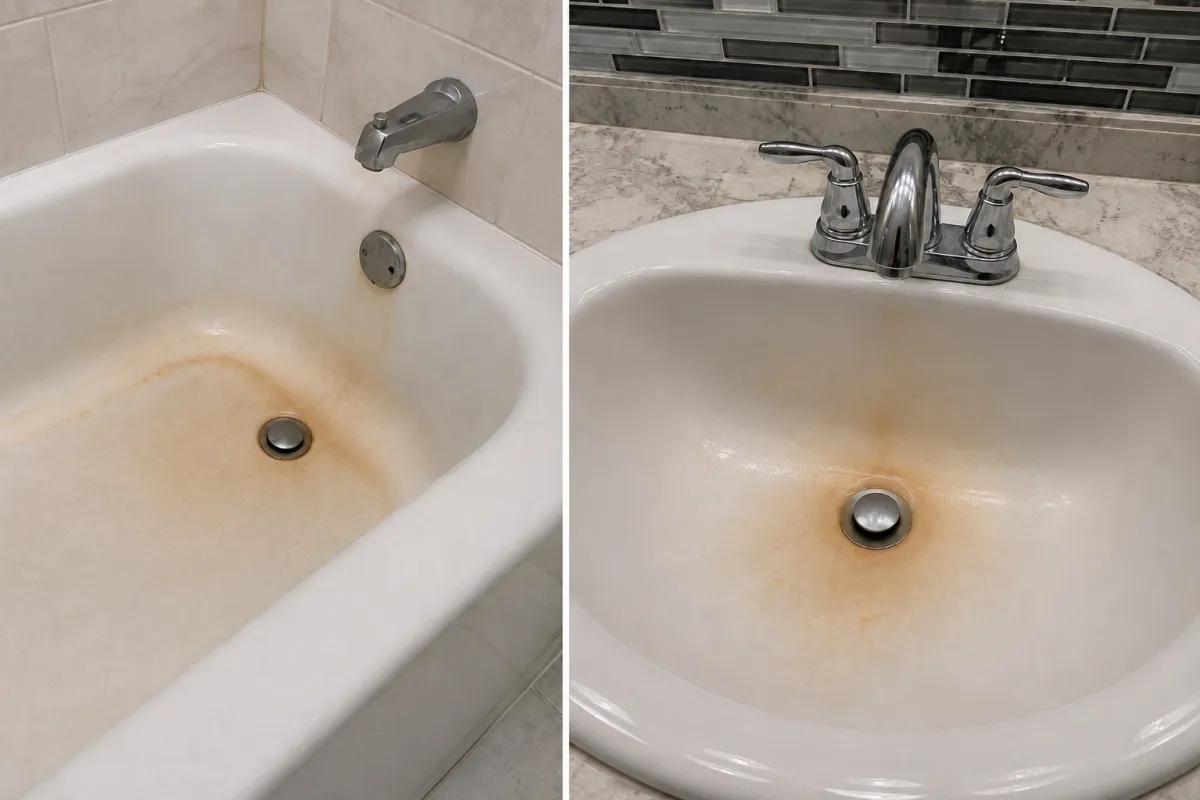
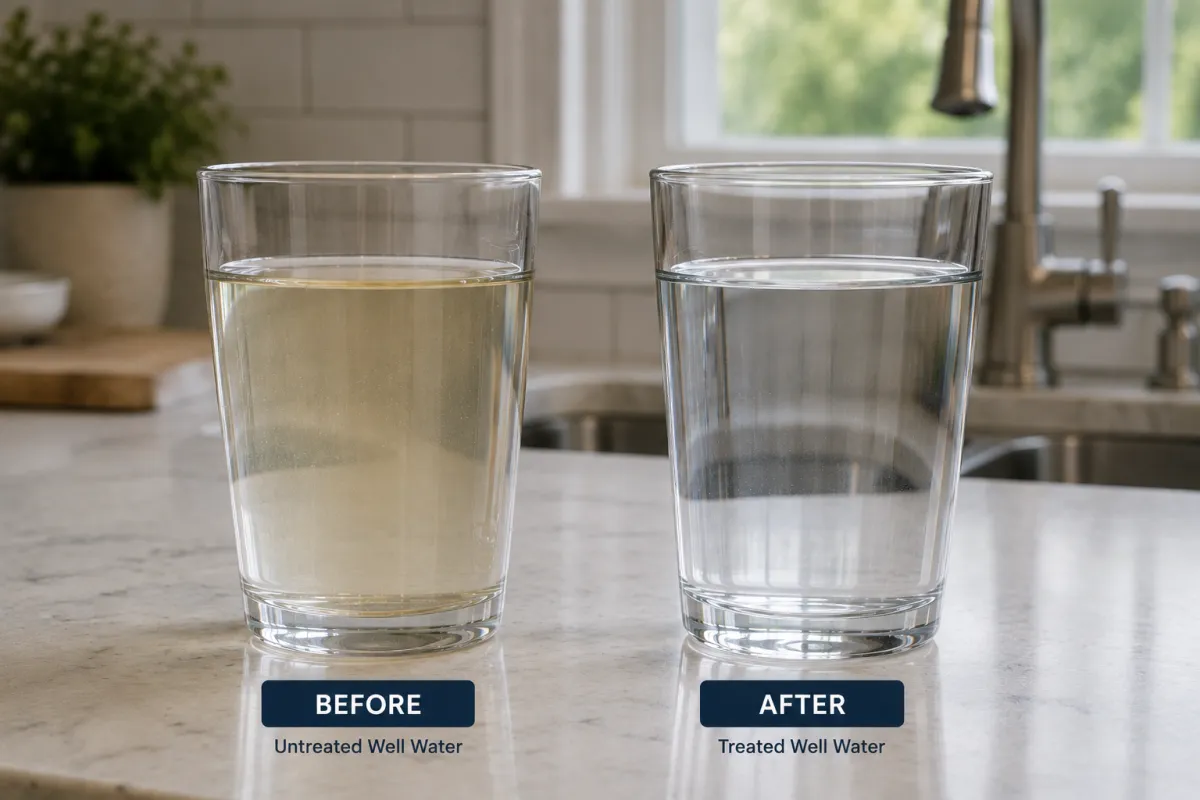
You're your own water utility. Along with hardness, Haines City area wells commonly show sulfur (rotten egg smell), iron (orange staining on driveways and fixtures), and occasional sediment. Treatment depends on what's actually in your water, which is why testing comes first, not equipment.
The Fixes
What the fixes actually are:
A water softener removes hardness minerals through ion exchange it's the fix for spots, scale, and dry skin.
Carbon filtration removes chlorine taste and odor from city water.
Aeration or oxidizing filters eliminate sulfur smell in well water. Iron filters stop the orange staining.
No single system does everything, and nobody can tell you what you need without testing your water first. That's why we start there for free.
What Testing Shows in Haines City's Tap Water
Public water testing records for Haines City show several contaminants at levels health researchers consider too high even though the water passes federal standards.
Disinfection byproducts top the list. These compounds trihalomethanes and haloacetic acids form when the chlorine used to treat the water reacts with natural organic matter, and they've been linked to increased cancer risk. Haines City's levels measure hundreds of times above modern health guidelines, and they're the same chlorine compounds behind the taste and smell many residents notice at the tap.
Testing has also detected chlorate, which is associated with thyroid harm, along with chromium-6 and low levels of radium.
Here's the catch: federal drinking water limits haven't been meaningfully updated in nearly twenty years. Water can pass every legal test and still fall short of what current health research recommends.
The good news, chlorine byproducts are among the easiest problems to fix. Carbon filtration removes them, and it's the same treatment that solves taste and odor. A free water test shows exactly what's coming out of your tap, including the hardness the city isn't required to treat at all.
Q: Is Haines City tap water safe to drink?
"Safe" and "problem-free" aren't the same thing, though: hardness, taste, and scale aren't regulated, and Haines City scores high on all three.
Q: How hard is the water in Haines City?
Typically 10–15+ grains per gallon "very hard" on the standard scale. For comparison, water pros consider anything over 7 hard.
Q: Why does my well water smell like rotten eggs?
That's hydrogen sulfide gas, common in Florida wells. It's usually harmless but unpleasant, and it's fixable with aeration or oxidizing filtration.